
Concept Building From Start to Finish
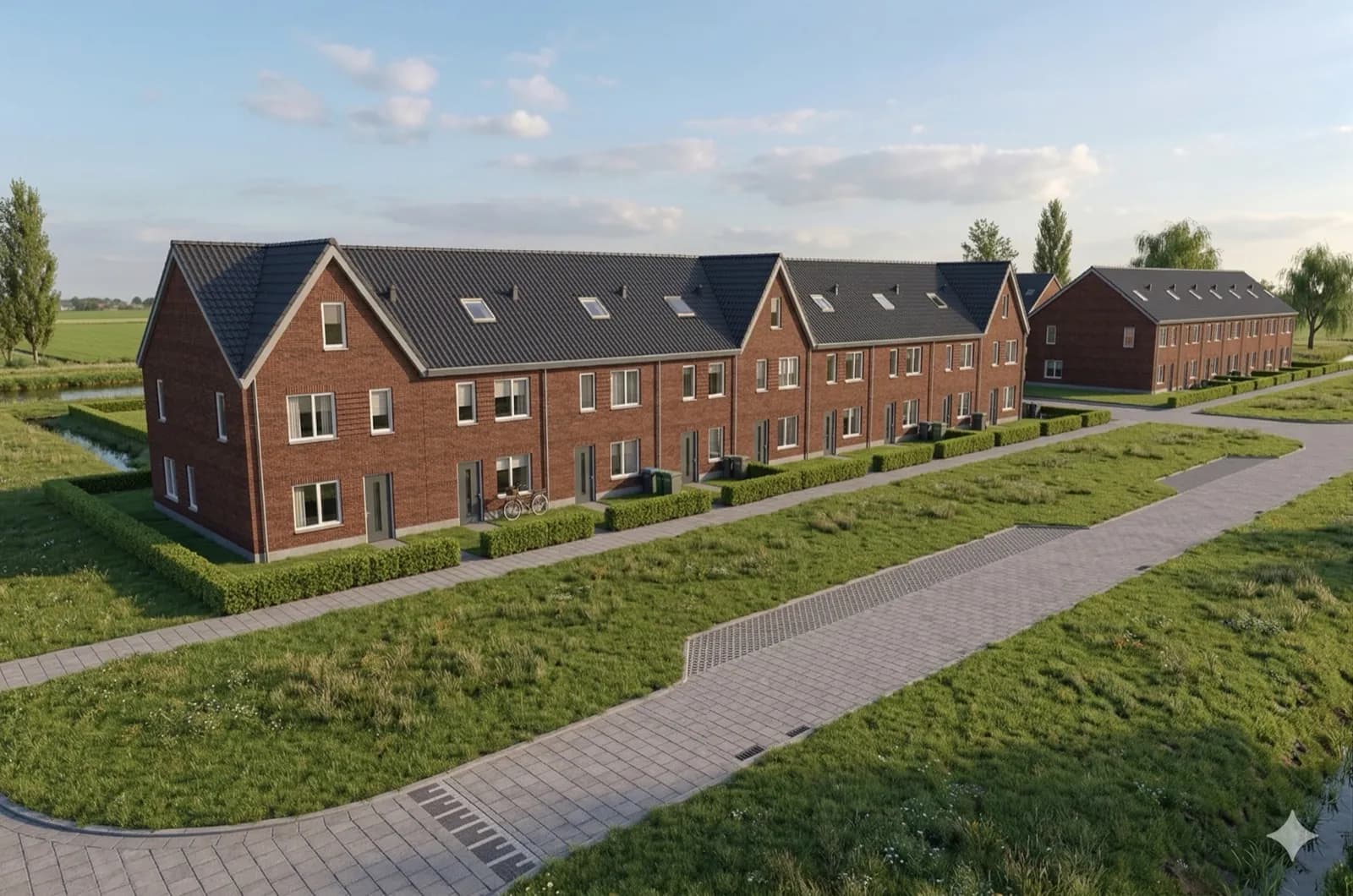
The Netherlands is facing a housing shortage. Strict regulations, high construction costs, and a growing gap between what people can afford and what actually gets built. The challenge is clear: we need to build. A lot, fast, affordable, and sustainably.
The key lies in a fundamental shift in thinking. Not thinking in individual projects, but in a continuously improving housing concept. Each iteration yields insights that make the next project better, faster, and more efficient. The core question of concept-based building: how do you ensure that with minimal complexity in execution, there is still enough freedom of choice (for buyers, but also for architects) to build homes people actually want to live in?
The answer lies in separating what varies per project from what stays the same across every home. The facades and roofs are project-specific. The installations, possible floor plans, and structural composition: those remain virtually the same. By consistently maintaining this distinction, a system emerges that is scalable without sacrificing quality or livability.
Since 2018, I've been working on automating various sub-processes in construction. It started with tools in Revit to automate repetitive work. Over the years, this has grown, with the goal of supporting the entire chain from one central platform.
A project developer starts by researching a potential plot of land. It's essential to understand how land prices have developed in the area, what's already there, and what can be built according to the zoning plan. Using PDOK map layers, context about the surroundings can be found quickly, allowing a developer to make an informed assessment early on.
Meanwhile, a concept manager has captured the building rules and logic that make up the housing concept in the system. This defines how a whole range of developer and buyer choices relate to the actual object to be built. The input is a list of choices, the output is a set of buildable elements, essentially a box of Lego bricks. Some of those bricks are project-specific, others remain virtually the same across every project.
These concepts can be queried from a central location, at various levels of detail. Because everything is worked out at the highest level of detail, a first version of a building block can easily be visualized. A project developer only needs to indicate the orientation and which plan options have been chosen (think roof shape or bay size) and the system immediately shows what the concept looks like.
From this, initial financial projections and a CO2 analysis can be derived. But it's also a blank canvas on which an architect can apply project-specific variation. With plugins that connect to the current workflow and existing software, an architect or engineer can develop and upload the necessary models to the system.
Next, we enable the buyer to fill in their choices in the most accessible way possible: a web application. The available choices are already determined by the selected developer options and applicable restrictions. This means a buyer can only make choices that result in a buildable home.
And this is perhaps the greatest value: the buyer actually gets to see what they're buying. No choices based on a paper option list, but real insight into how the space changes with a dormer or extension. The buyer is happy because they can make a well-considered decision. The developer is happy because more options are sold. Using the same methodology, a VR environment can be set up where potential buyers can experience the home at full scale.
After submission, the configuration ends up in the same environment. From here, a BIM model can be automatically assembled based on the choices made, from which construction drawings can be generated or a factory can be driven. A buyer coordinator sees which options have been chosen and can push these to other systems.
Because we know exactly which components are in each home, this also brings opportunities that extend beyond the construction phase. Think asset management, circular building, and better aftercare for buyers. Each home essentially has a digital passport that follows it throughout its entire lifecycle.
When I started this, I didn't expect it would be feasible to support this entire chain, especially not as a startup. Yet I'm incredibly grateful that I've had the opportunity to build this over the past years. Thanks to all our clients who trust us to make this a reality, step by step.
The future of housing construction is concept-based, and that future is closer than you think.
Let's talk.
Have a project in mind or want to learn more about what we do? Send us a message.