
From Buyer Choice to Construction-Ready BIM, Automatically
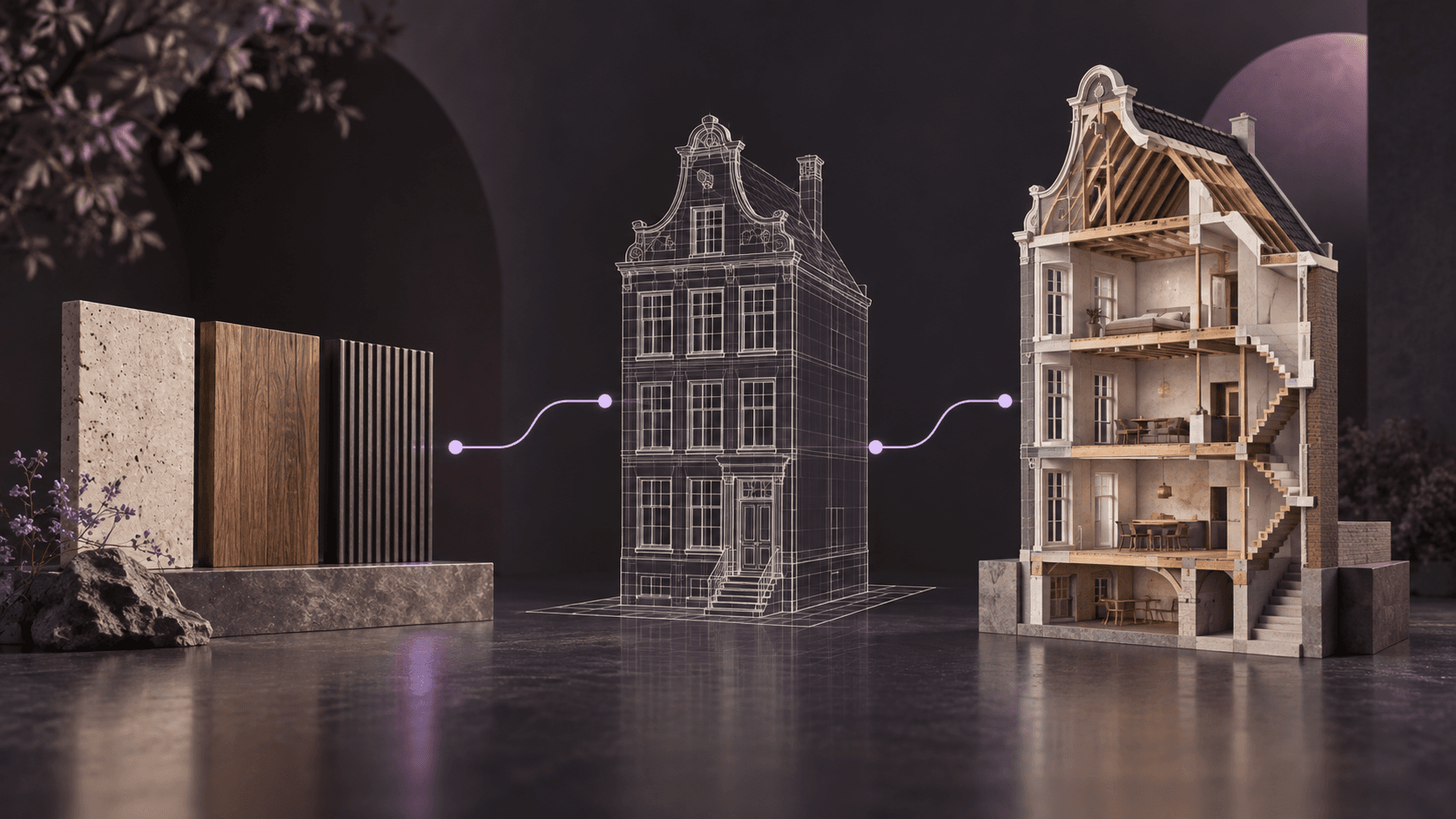
One of the biggest hidden costs in concept-based construction is what happens after the buyer makes a choice. The dormer is selected, the floor plan adjusted, the kitchen reconfigured, and somewhere in the office, an engineer opens a Revit file and spends hours updating a model to reflect those choices.
Multiply that across hundreds of homes in a project, and across multiple variants per home, and the bottleneck becomes obvious.
Over the past months we've been building the missing link: a fleet of Revit workers that automatically picks up buyer configurations, builds the corresponding BIM model, and pushes the result back into the platform. No engineer in the loop for the routine work.
A project can now be queued in three forms: an entire block configuration (the full multi-home arrangement on the plot), individual home variants, and per-house option-sales variants. The platform schedules the work, sends it to an available Revit worker, monitors progress, and handles retries when something goes wrong.
The workers themselves run continuously in the background. They poll for work, claim jobs, generate models, upload the results. From a project manager's perspective: you queue a configuration and the BIM model appears in the platform a few minutes later, ready for export to construction drawings, for upload to the factory, or for further refinement.
We've added bulk retry, skip, and progress monitoring so a project lead can queue hundreds of configurations overnight and see which ones succeeded by morning. Specific buyer choices like wall sockets and light points are placed correctly as Revit family instances. Houses on different orientations are mirrored without manual intervention. A "no-template" mode lets the same machinery generate clean, shareable starter projects without proprietary content.
This is the part of concept-based building that nobody sees, but it's where most of the hidden labor lives. By automating it, we free engineers to focus on the genuinely creative work (designing new types, refining the concept, solving unusual cases) instead of repeatedly updating models for variations that the configurator already knows everything about.
Let's talk.
Have a project in mind or want to learn more about what we do? Send us a message.